
Begin with conditions
Sun, shade, soil texture, moisture, winter exposure, salt, deer pressure, snow storage, and maintenance expectations narrow the plant list. A species can be native to Minnesota and still be wrong for one specific front yard.
Give the garden visible structure
A clear bed line, path, wall, mown edge, or repeated structural plant tells the eye that the planting is intentional. These cues are especially important while young perennials are filling in.
- Repeat a limited palette
- Plant in readable groups
- Use grasses and sedges as a matrix
- Keep circulation edges clear
- Plan mature height around windows and walks
Plan a season, not one bloom
Combine spring emergence, early flowers, summer color, fall seed heads, grasses, bark, and evergreen structure. The strongest planting still has form after the flowers fade and supports wildlife beyond a single month.
Match the style to the home
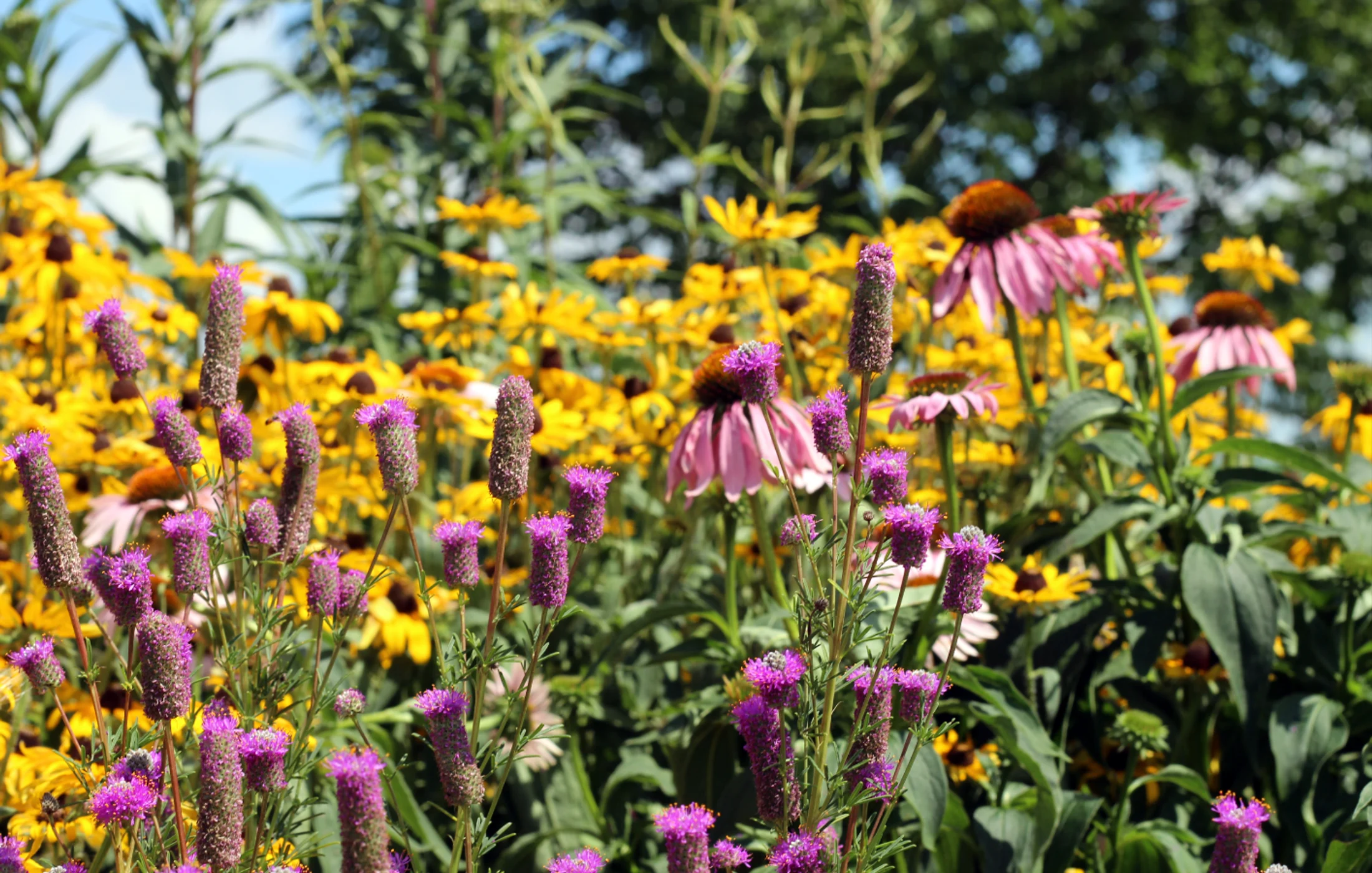
Native-forward planting can feel prairie-like, modern, cottage-inspired, woodland, or restrained. Architecture, paving, walls, fences, and the size of the property should influence plant density and repetition.
Maintenance changes—it does not disappear
Established native plants may need less irrigation and fewer inputs, but the garden still benefits from seasonal cutting, weeding, editing, division, and control of aggressive volunteers. A realistic care plan keeps the composition legible.