
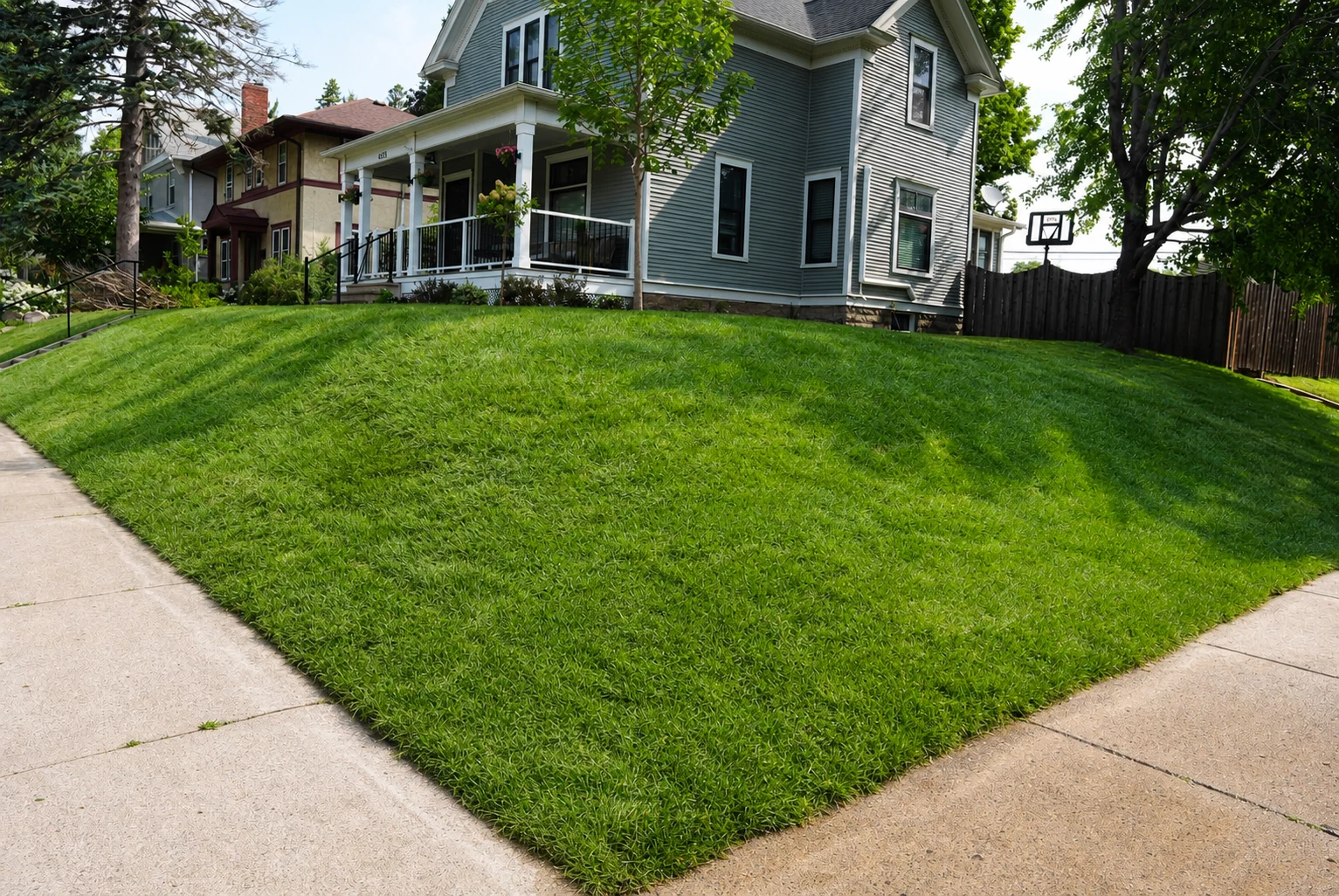
Find where the water begins
Roof areas can send hundreds of gallons toward a foundation during a heavy rain. Short downspouts, settled soil, a raised neighboring lot, or a patio pitched the wrong direction may all feed the same low area. Treating only the puddle misses the source.
Grading and drains do different jobs
Grading uses the surface to move water away from structures and prevent collection. A drain captures water and carries it through pipe to a suitable outlet. Some properties need one; many need a coordinated combination.
- Positive grade near the foundation
- Extended or buried downspout conveyance
- Catch basins at concentrated low points
- Solid pipe to a lawful, functional outlet
- Erosion-resistant finish restoration
French drains are not universal answers
A gravel trench can intercept subsurface water, but it cannot make water disappear. Without the right elevation, soil conditions, and outlet, a French drain may simply store water in another place. The system must match the actual movement of the site.
Drainage belongs in the landscape plan
Patios, walks, retaining walls, planting beds, fences, and lawn restoration all change how water travels. Coordinating them prevents finished work from creating a new problem and produces cleaner transitions after excavation.
What a useful consultation should examine
Walk the property after rain if possible. Note the roof outlets, foundation grade, low points, slope changes, neighboring runoff, soil condition, and where water could safely go. Those observations are more valuable than choosing a drain product first.